G
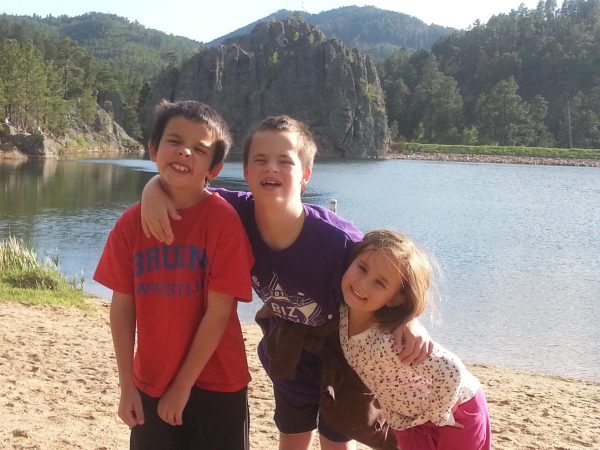 rowing up, I witnessed the obstacles my parents worked through so my brother Andrew could have access to the same opportunities as those around him. Each conversation left me feeling frustrated and powerless, but also motivated to make that change. I didn’t know what action would look like yet, only that I wanted to be part of changing that reality. The resources my parents relied on were often confusing and difficult to navigate. And this wasn’t specific to just my family; the family friends surrounding me were experiencing the same struggles. Information was often scattered across multiple sites, written in high technical language, and difficult to navigate. Even when families wanted to participate in research, the process felt confusing and discouraging. These experiences shaped my passion for accessibility and inspired my work at the REDI Lab.
So I decided to make that change; my REDI Lab project focuses on rethinking how disability research is shared and who it is designed for. While research is essential for improving care, treatment, and quality of life, it often fails to center the voices of disabled individuals and their families. Statistics reflect this gap clearly: although 72% of parents say they are willing to have their child participate in research, only 36% have actually enrolled in studies. Additionally, 40% of caregivers report that current healthcare information does not meet their needs, and only 2% of patient education materials meet the recommended sixth-grade reading level. These numbers reveal a system that unintentionally excludes the very communities it aims to serve.
Through my project, I explored how accessibility could be improved through centralizing research information and presenting it in a way that is understandable, respectful, and community-informed. I interned with DS-Connect, a national Down syndrome research registry, to understand how they make their research accessible to the Down syndrome community. DS-Connect serves as a key platform for connecting individuals and families to research, but I wanted to find a way to understand how it could better meet users’ needs through clearer language, improved navigation, and stronger representation of disabled voices.
A key component of my project was developing a survey to gather direct feedback from the community. The survey asks users about their experiences with DS-Connect, including how easy it was to find information, whether research descriptions felt approachable, and what accessibility features they would like to see more of. By prioritizing community feedback, this approach shifts research design from being expert-led to community-shaped.
The broader idea of my project is not to just improve one platform but rather to propose a model for disability research as a whole. If research is centralized, written to be understood, and shaped by the people it affects, families can access information more easily, individuals gain greater choice and agency, and accessibility becomes the standard rather than an afterthought. Ultimately, my goal for this model is for it to have the potential to expand beyond one disability community and transform how research connects with people.
Through this project, I learned that accessibility is not simply about simplifying language—it is about respect, inclusion, and ensuring that research truly serves its purpose. My work in the REDI Lab reflects my belief that research should be understandable, inclusive, and built with communities, not just about them.